


.png)
Stargazing Made Simple: The Ultimate Beginner’s Guide to Astronomy in the UK

There is something powerful about looking up at the night sky. For many in the UKSN community, spending time outdoors already connects us to the seasons, weather patterns and the natural world. Astronomy simply takes that connection a little further.

We are proud to share this in-depth beginner’s guide written by UKSN member Gary Swift, a keen astronomer with a passion for helping others get started properly. If you have ever wondered how to begin stargazing in the UK, this guide will give you realistic expectations and practical advice.
A Beginner’s Guide to Astronomy
By Gary Swift
Welcome to the fascinating world of astronomy. Whether you are simply curious about the night sky or considering investing in equipment, this guide will help you begin your journey with confidence and realistic expectations.
Getting Started with Astronomy: The Most Important Tool
You do not need expensive equipment to begin observing the night sky. Your most valuable starting instrument is your own eyesight.
For thousands of years, observers have:
Watched the changing phases of the Moon
Identified constellations and seasonal star patterns
Distinguished planets from stars
Observed meteors, often called shooting stars
Viewed the Andromeda Galaxy with the naked eye
If possible, observe from a dark location away from street lighting. Even modest improvements in sky darkness dramatically enhance what you can see.

Becoming familiar with the night sky is never wasted effort. Learning prominent constellations such as Orion, Ursa Major, often called The Plough or Great Bear, and Cassiopeia will significantly improve your ability to navigate and locate more challenging objects.
Sky mapping apps such as Stellarium are excellent tools, and traditional planispheres or printed star charts remain highly effective.
UKSN Practical Tip
Many UKSN camps are held in darker rural areas. If you attend, take advantage of lower light pollution. A simple red head torch will preserve your night vision and improve your ability to see faint objects.
Binoculars for Stargazing: The Ideal Next Step
Binoculars are often overlooked but are one of the most effective beginner instruments in astronomy.
With a good pair of binoculars, you can:
Resolve lunar craters
Observe Jupiter’s four largest moons
Detect Saturn’s rings
Explore star clusters and bright nebulae
They are portable, intuitive to use and require no setup time. Steadying yourself against a wall or reclining in a chair improves stability.
Recommended Specifications
8×40, lightweight and excellent for younger observers
10×50, a superb all round choice for adults with greater light gathering ability
Quality used binoculars can often be obtained very affordably and, if well cared for, will last many years.

Dedicated astronomy binoculars such as the Celestron SkyMaster 25x70 offer greater magnification and aperture but typically require a tripod due to their weight and reduced stability when handheld.
UKSN Tip: Planets, Stars, and Moons – What’s the Difference?
When you start stargazing, it can be tricky to tell planets, stars, and moons apart. Here’s a simple guide:
Stars - These are massive balls of burning gas that emit their own light. They twinkle in the night sky, and constellations are made up of stars. Examples include Sirius and Vega.
Planets - Planets orbit stars and reflect their light rather than producing their own. They usually shine with a steady glow and do not twinkle like stars. Venus, Jupiter, and Saturn are the easiest to spot with the naked eye.
Moons - Moons orbit planets, not stars. Our Moon is the most obvious example in the UK night sky. Other planets like Jupiter also have moons, which can sometimes be seen with binoculars.
Pro Tip: When you see a bright, steady object that doesn’t twinkle, it’s often a planet. Twinkling points of light are almost always stars.
The Easiest Things to Spot in the Night Sky (UK Beginner Targets)
If you are just starting out with astronomy in the UK, the key is early success. Spotting bright, obvious objects builds confidence and helps you learn how the sky moves through the seasons. Here are some of the easiest night sky objects to locate and how to find them.
The Moon

The Moon is the most obvious and rewarding object to observe.
Why it is ideal for beginners:
Visible even from heavily light polluted areas
Changes phase throughout the month
Reveals craters and shadows with binoculars
How to spot it: Simply look up. The Moon rises in the east and sets in the west, but the time changes depending on its phase. A crescent Moon shortly after sunset is especially beautiful. Avoid observing when it is completely full if you want to see more surface detail, as shadows are reduced.

The Plough/Ursa Major
Ursa Major, commonly recognised as The Plough in the UK, is one of the easiest star patterns to identify.
Why it is useful:
Visible all year round in the UK
Helps you locate the North Star
How to spot it: Look north. The Plough looks like a saucepan or ladle shape. Follow the two stars at the front edge of the bowl upwards and you will find Polaris, the North Star. This is a brilliant way to practise natural navigation skills.

Orion
Orion is one of the most recognisable constellations in the winter sky.
Why beginners love it:
Bright and easy to recognise
Contains multiple visible features
How to spot it: Look south on clear winter evenings. Orion is identified by three bright stars in a straight line, known as Orion’s Belt. Beneath the belt, you can often see a faint fuzzy patch. This is the Orion Nebula, one of the most impressive objects visible with binoculars.

Venus
Venus is often the brightest object in the sky after the Moon.
Why it stands out:
Extremely bright
Visible shortly after sunset or before sunrise
How to spot it: Look low on the western horizon just after sunset, or low in the east before sunrise, depending on the time of year. It does not twinkle like stars and shines with a steady white glow.

Jupiter
Jupiter is another excellent beginner target.
Why it is exciting:
Bright and easy to find
Its four largest moons are visible with binoculars
How to spot it: Jupiter appears as a very bright star-like object. It does not twinkle as much as surrounding stars. Through binoculars, you may see small pinpoints lined up beside it. These are its moons.
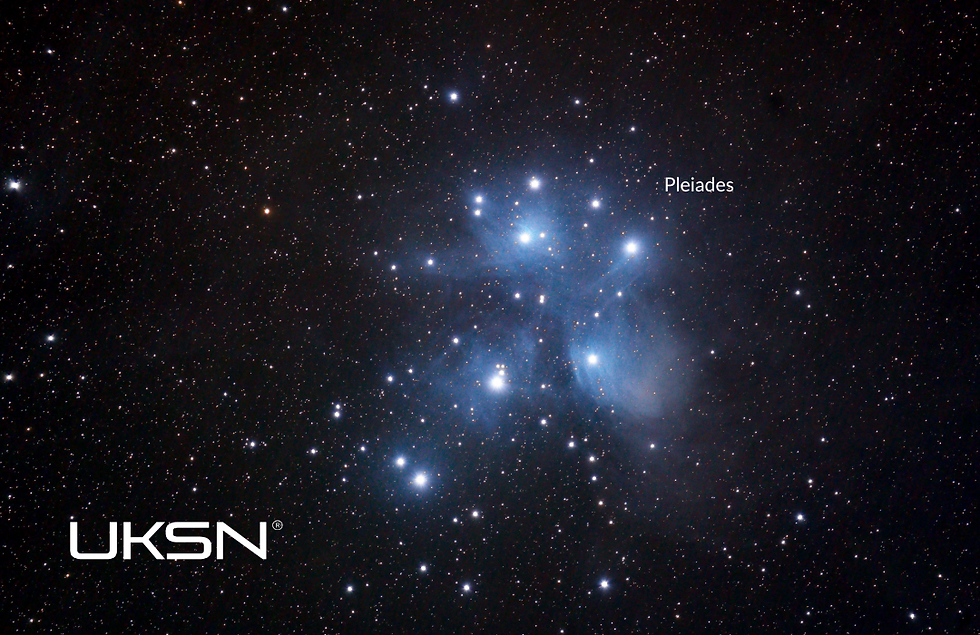
The Pleiades
Pleiades, also known as the Seven Sisters, is a beautiful open star cluster.
Why it is rewarding:
Visible to the naked eye
Stunning through binoculars
A Simple Method for Locating Objects
Start with the naked eye
Identify a bright, obvious constellation such as the Ursa Major
Use it as a reference point
Confirm what you are seeing with an app such as Stellarium
Then use binoculars to enhance the view
Do not rush. Allow your eyes to adjust. The more time you spend observing, the more detail you will notice.
UKSN Practical Advice
If you are at a UKSN camp or Charter meet, make this a group activity. Ask everyone to find the same object using only verbal directions. It sharpens communication, night awareness and confidence in low light environments.
Choosing the Best Beginner Telescope in the UK
A common question is, which telescope should I buy?
The best telescope is the one you will use regularly. Larger is not always better, and ease of use often matters more than raw specification.
A Word of Caution
Avoid very cheap department store or toy telescopes. Poor optics and unstable mounts frequently lead to frustration and abandonment of the hobby. A good pair of binoculars is often a better investment until you are ready to commit to quality equipment.
The Main Types of Telescopes Explained
1. Refractors, Lens Telescopes
Use glass lenses
Excellent for lunar and planetary observation
Provide crisp, high contrast images
Cost increases significantly with larger apertures
2. Reflectors, Mirror Telescopes
Use mirrors
Offer excellent value for larger apertures
Particularly good for deep sky objects such as galaxies and nebulae
Dobsonian mounted reflectors are especially popular because they:
Are simple to operate
Provide excellent aperture per cost
Require minimal setup
An 8 inch Dobsonian is often considered a sweet spot for serious beginners.
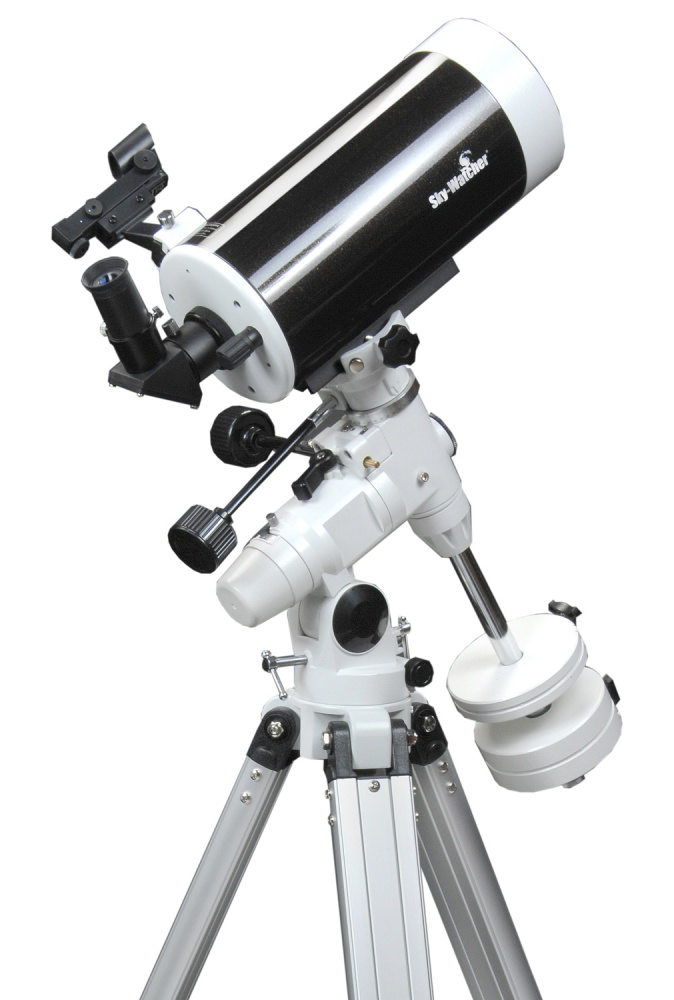
3. Catadioptric Telescopes, Mirror and Lens
Combine mirrors and lenses
Compact and portable
Often available with computerised GoTo systems
Examples include Maksutov and Schmidt Cassegrain designs such as the Sky-Watcher Skymax 127.
Smart Telescopes and Modern Astronomy Technology

Recent technological advances have introduced integrated digital smart telescopes such as the Dwarf 3.
These instruments:
Combine telescope optics with a sensitive digital sensor
Automatically capture and stack hundreds of short exposures
Produce impressive deep sky images from light polluted environments
They are designed primarily for astrophotography rather than visual observing. The built in sensors are vastly more sensitive than the human eye, enabling imaging of objects that would be invisible visually.
For those interested in imaging without the complexity of traditional astrophotography setups, these systems can be highly rewarding.
Dwarf 3 Astrophotography Gallery
If you’re curious about the Dwarf 3 and want to see what it’s capable of, check out Gary’s Astrophotography gallery below.
Understanding Key Astronomy Concepts
Finder Scope
A finder scope is a small auxiliary telescope mounted on the main tube. It provides a wider field of view, allowing you to locate and centre objects before viewing them at higher magnification.
Aperture
Aperture refers to the diameter of the telescope’s main mirror or lens.
Greater aperture means:
More light gathering
Brighter images
Improved resolution
Aperture is generally more important than magnification.
Magnification
Magnification depends on the eyepiece used. Higher magnification does not always improve the view and many deep sky objects appear best at lower magnification due to their large apparent size.
Barlow Lenses
A Barlow lens increases magnification by multiplying the effective focal length of your telescope. While useful, a range of quality eyepieces often provides more flexibility and better optical performance.
Filters
Filters can enhance observing by:
Reducing lunar brightness
Increasing planetary contrast
Improving visibility of certain nebulae
They are optional but can enhance specific observations.
UKSN Tip: Asteroids, Comets, and Meteors – Spotting the Difference
When exploring the night sky, it’s useful to know the difference between asteroids, comets, and meteors, as all three can occasionally be visible:
Asteroids - Rocky or metallic objects orbiting the Sun, mostly found in the asteroid belt between Mars and Jupiter. They generally appear as small, faint points of light, similar to stars, and do not have tails. Only larger asteroids are visible through telescopes.
Comets - Made of ice, dust, and rock. As they approach the Sun, they heat up and release gas and dust, forming a glowing coma and often a visible tail that can stretch across the sky. Famous examples include Halley’s Comet.
Meteors - Often called “shooting stars,” meteors are small pieces of rock or dust that burn up in the Earth’s atmosphere. They appear as bright streaks of light across the sky and are only visible for a few seconds. Meteor showers, like the Perseids in August, are great events to catch many at once.
Pro Tip: If you see a bright object with a fuzzy glow or a tail pointing away from the Sun, it’s a comet. If it’s a tiny, steady point of light moving slowly over nights, it’s probably an asteroid. If it’s a quick streak that flashes and disappears in seconds, that’s a meteor.
Recommended Astronomy Books for Beginners
Two highly regarded beginner references are:
These books provide practical, observer focused guidance and structured observing lists.
Useful Stargazing Apps
Weather forecasting apps for cloud cover and seeing conditions
Sky identification apps such as Stellarium
Moon phase trackers
Night photography apps for smartphone astrophotography
UKSN Tip: Satellites vs Meteors - How to Tell the Difference
When you’re watching the night sky, it’s easy to mistake satellites for meteors, but there’s a simple way to tell them apart:
Satellites - Human-made objects orbiting the Earth. They usually appear as steady points of light moving slowly across the sky. They don’t twinkle and can take several minutes to cross from horizon to horizon. Popular examples include the International Space Station (ISS), which can be very bright, and the Starlink satellite trains, which often appear as a line of lights moving together.
Meteors - Small rocks or dust entering the Earth’s atmosphere. They burn up, creating a bright, fast streak of light, often called a “shooting star.” Meteors last only a few seconds and move much faster than satellites. Meteor showers, like the Perseids or Geminids, are the best times to see many in a night.
Pro Tip: If it moves slowly and steadily, it’s likely a satellite. If it blazes across quickly and disappears, it’s a meteor. Watching the same patch of sky for a few minutes can help you spot both. Keep an eye out for Starlink trains - they can be very striking, especially just after sunset or before sunrise.
Astrophotography for Beginners

Astrophotography ranges from simple smartphone images to highly technical and expensive setups.
You can begin with:
A smartphone on a tripod
A smartphone adapter attached to an eyepiece
A DSLR camera
A dedicated astronomy camera (such as the Dwarf 3)
Even basic lunar images can be extremely satisfying and serve as an excellent introduction to imaging techniques.
Joining a Local UK Astronomy Club
Before purchasing a telescope, consider visiting a local astronomy society. Viewing through different instruments and speaking with experienced observers can prevent costly mistakes and accelerate your learning.
Gary Swifts Final Thoughts
Astronomy rewards patience, curiosity and persistence. You do not need sophisticated equipment to begin. Start with the sky itself. Learn the constellations. Observe regularly. Build experience gradually.
The universe has been there for billions of years. It will still be there tomorrow night.
A huge thank you to Gary Swift for sharing this beginner’s guide to astronomy with the UKSN community. Gary is currently building his own astronomy website, and we encourage members with an interest in stargazing to visit and check out his incredible astrophotography. Gary can also be found on our small UKSN Astronomy WhatsApp group, so feel free to head over, say hi, and ask any questions you may have.
If you have ever thought about exploring the night sky, now is the perfect time to start. Step outside tonight and look up.

UKSN Stargazing Challenge
If you are new to astronomy, here is your UKSN challenge for this month:
Learn and identify three constellations visible from your location
Track the Moon’s phase for one full week
Identify at least one visible planet
Share your observations or photographs in the UKSN community
Bonus for Charters and families: organise a simple night observation session during your next meet.


Comments