


Franken-Steak on the Shelves? The Truth About Lab-Grown Meat Coming to UK Supermarkets!

Imagine sitting round the campfire after a hard weekend of bushcraft, slicing into a thick, sizzling cut of beef, only to realise it never came from a cow. No pasture, no livestock farmer, and definitely no traditional butchery. Instead, that fillet started life inside a stainless steel bioreactor tank in an industrial laboratory....
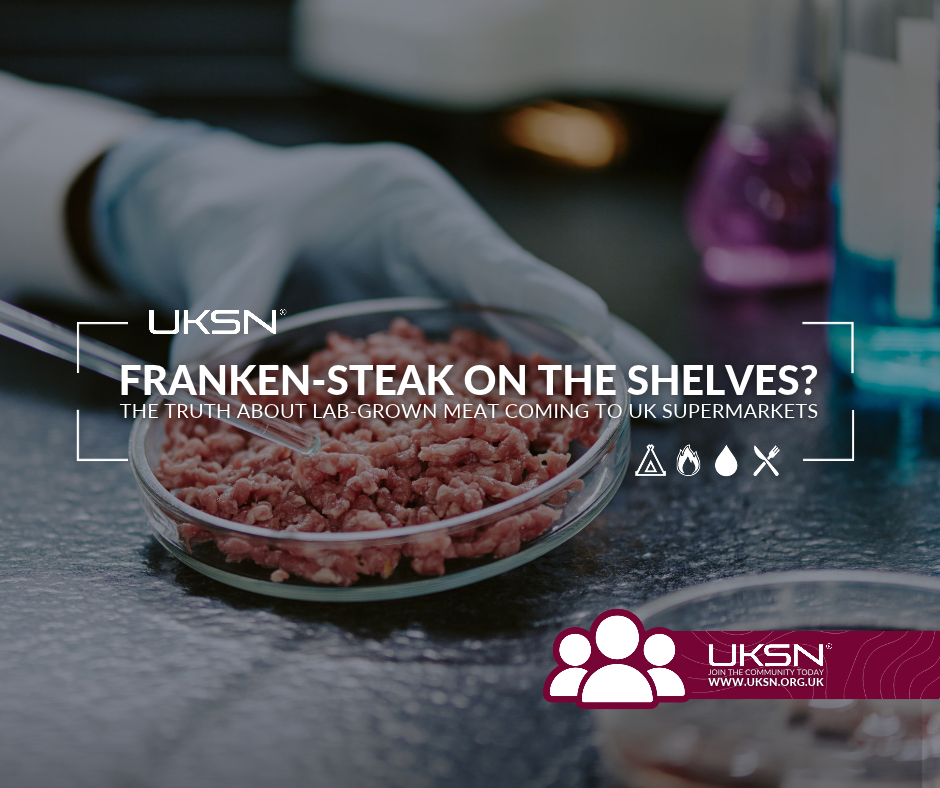
It sounds like pure science fiction, but lab-grown meat is racing towards high street supermarkets. From petri-dish steaks and cell-cultured salmon to molecular eggs, the race to overhaul how Britain eats is well underway.
For those of us in the UKSN community who value self-sufficiency, outdoor resilience, and knowing exactly where our food originates, this raises massive questions. Is lab-grown food really about to hit Tesco and Sainsbury's? How safe is it? And what does it mean for your family pantry and outdoor food prep?
Let us dive into the facts, cut through the hype, and look at what is genuinely heading for British dinner plates.

What Exactly Is Cultivated Food?
To be clear, we are not talking about Quorn, soya mince, or bean burgers. Cultivated meat, fish, and dairy alternatives are biological duplicates made from actual animal cells.
Scientists extract a harmless tissue sample from an animal, isolate the muscle or fat stem cells, and place them inside a sterile bioreactor. These cells are fed a nutrient-dense broth containing amino acids, glucose, vitamins, and minerals. Kept at body temperature, the cells multiply and fuse into muscle fibres.
Within a matter of weeks, the result is biological animal protein produced without raising or culling livestock.
The technology does not stop at red meat:
Cultivated Seafood: Yellowtail, salmon, and bluefin tuna grown from fish cells, targeting issues like microplastics, heavy metals, and overfished coastal waters.
Lab-Cultured Eggs and Dairy: Precision fermentation uses microbes engineered with bovine or avian DNA to brew real whey, casein, and egg-white proteins without a single cow or chicken on site.
Hybrid Staples: The earliest supermarket items will likely be hybrid blends, combining plant proteins with cell-grown animal fat to mimic the authentic sizzle, smell, and mouthfeel of real burgers and sausages.

When Will Lab-Grown Meat Arrive in the UK?
You might have spotted headlines claiming lab meat is right around the corner. While pet treats using cultivated chicken have already cleared clearance hurdles, human plates require far stricter testing.
The Food Standards Agency (FSA) and Food Standards Scotland (FSS) are currently running a dedicated regulatory programme to examine safety, nutritional parity, and manufacturing hygiene. Regulators are actively assessing safety files for several novel food applications.
Industry insiders expect initial commercial rollouts to appear first in high-end restaurant tastings and specialist pop-ups, where production costs can be absorbed. From there, supermarket shelves are expected to see hybrid mince, burgers, and nuggets follow once facilities scale up.
In short: you won't find a cultured ribeye in the reduced aisle next Tuesday, but the wheels are firmly in motion.
The Big Debate: Miracle Solution or Ultra-Processed Trap?
Depending on who you ask, cultivated food is either the salvation of planetary resources or an over-engineered corporate gamble.
The Arguments in Favour
Land and Resource Efficiency: Cultivated protein requires drastically less agricultural land and fresh water, freeing up space for rewilding, woodland management, and native habitats.
Sterile Production: Because the tissue grows in completely sealed vessels, production avoids foodborne pathogens like Salmonella or E. coli and eliminates routine agricultural antibiotics.
Climate Resilience: Factory-grown protein is completely decoupled from erratic weather, droughts, and harvest failures, creating an industrial buffer against supply chain shocks.
The Serious Concerns
The Ultra-Processed Factor: While it is genuine animal protein on a cellular level, growing it requires highly refined nutrient broths, chemical growth stimulants, and high-energy machinery. Many UK families are actively trying to cut ultra-processed foods out of their diets, not add more.
Centralised Food Monopolies: Traditional farming is distributed across thousands of independent British farmers and smallholders. Cultivated food relies on massive capital investment, patents, and centralised bio-facilities. If a handful of tech corporations control the food supply, real self-reliance takes a massive hit.
Energy Vulnerability: You cannot run a bioreactor off-grid without immense power. In a prolonged grid failure or energy crisis, a high-tech vat shuts down instantly, whereas traditional livestock and resilient smallholdings keep producing.
The UKSN View: Tech Novelty vs True Self-Reliance
Here at UKSN, our philosophy has always been built on grounded, family-friendly practical skills. We champion understanding the natural world, supporting responsible British producers, mastering food preservation, and building local mutual support through our UKSN Charters.
Cultivated meat may very well play a role in feeding crowded urban populations and easing pressures on global supply lines in the decades ahead. But it can never replace the hands-on capability of growing your own greens, keeping backyard hens, sourcing meat locally, or smoking and drying provisions for your next camp.
True food security does not come in a branded foil packet engineered in a business park; it lives in your skills, your community, and your pantry.

This Week's UKSN Community Challenge: The "Old School" Pantry Audit
With scientists spending millions to grow food in vats, our challenge this week strips things right back to basics!
Challenge: Preserve One Meal Without the Grid
Your mission this week is to prepare, preserve, or source one complete family meal using traditional, self-sufficient methods.
Pick Your Method: Dehydrate your own beef jerky or camp stew veggies, water-glass a dozen fresh eggs from a local farm, or prepare a batch of salted, pickled, or pressure-canned provisions.
Test It on Camp: Take your preserved meal on your next wild camp, weekend hike, or cook it up outdoors on your fire pit with the family.
Share With the Community: Snap a photo of your meal prep and share the recipe on the UKSN Facebook group or Whatsapp community. Let everyone know how it turned out and how long you expect it to keep.
Let the labs keep their petri dishes. We will stick to real ingredients, honest smoke, and trusted skills every single time!


Comments